The Best Stress Apps for Apple Watch, Compared
The best stress app Apple Watch users can run does two jobs: catch the spike as it builds, then respond in the moment. Most apps stop at one.

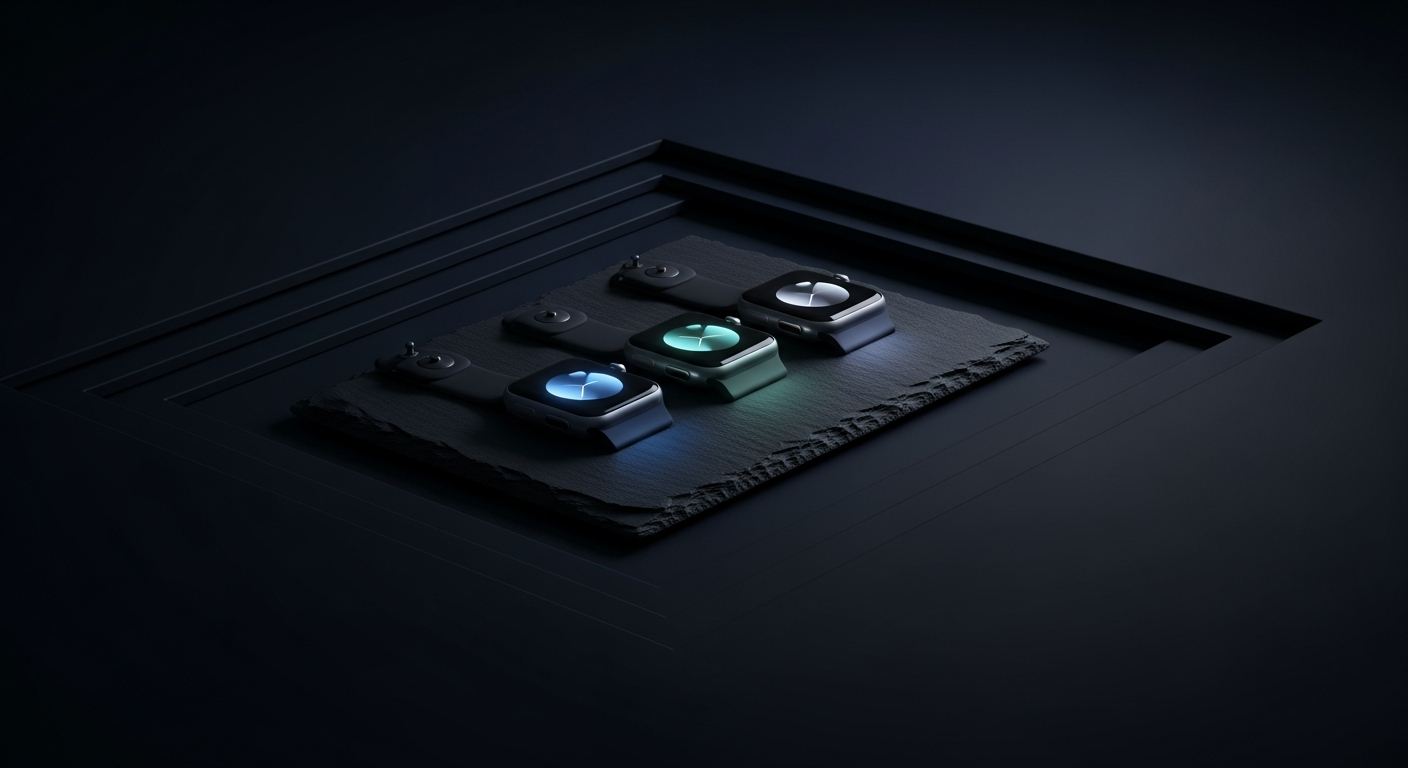
StressWatch, one of the better-known stress apps for Apple Watch, checks your HRV every two to five hours on its default setting. A stress spike builds and peaks in minutes. That mismatch runs through this entire category.
The best stress app Apple Watch users can run has two jobs. Notice the spike while it's still building. Respond before it compounds.
Almost every app on the market does one job and skips the other. This comparison covers six options, including what the watch does natively, and is fair about where each one earns its price. One scope note: this is about apps, not hardware — if you're deciding which device to buy, read Apple Watch vs Whoop vs Oura instead.
The Best Stress App Apple Watch Ships With Doesn't Exist
Apple Watch has no built-in stress score. The hardware measures everything needed for one: heart rate, HRV, sleep, motion, wrist temperature. watchOS never turns those signals into a stress feature.
That restraint makes engineering sense. Heart signals move for reasons unrelated to stress, and a score built on one signal would false-alarm daily. Apple ships the raw data through HealthKit instead, which is why this entire third-party category exists.
One detail shapes everything downstream. The watch writes HRV to Health at intervals rather than continuously, which is a big part of why several trackers here update in hours, not minutes. How an app works around that cadence is part of what you're paying for.
What Apple offers natively is the Mindfulness app. Breathe runs a paced breathing session, one to five minutes, with haptic pacing. Reflect offers a short prompt, and State of Mind lets you log how you feel and see how it lines up with sleep, daylight, and exercise.
None of that detects anything. The watch can flag an unusually high heart rate while you're inactive, but that is a cardiac safety alert; it says nothing about stress. We covered what the sensors can and can't see in Does Apple Watch Detect Stress?
So every app below is a third-party answer to the same gap. They read the same sensors, so what separates them is what they do with the signal. The comparison below groups them by that answer.
The Tracker Apps Measure More Than They Help
The three biggest third-party names are measurement tools: Stress Monitor for Watch, StressWatch, and Welltory. Each earns its price if a clear read is what you want.
Stress Monitor for Watch, from ActiveAce, is the cleanest single-purpose option. It reads HRV and resting heart rate, scores your current stress against your capacity, and sends a notification when the numbers climb. It also folds in your two-week sleep and activity trends to explain the score, and it supports ECG readings from the watch.
Its heat-map calendar is the standout. After a few weeks you can see which days, and which meetings, cost you the most. It runs $14.99 a month or $79.99 a year.
StressWatch is the budget pick at $12.99 a month or $39.99 a year. It pulls resting heart rate and HRV from Apple Health, puts a live stress score on your watch face as a complication, and adds habit tracking with an AI coach on top. The habit side ties your score to behaviors like mindfulness minutes, steps, and sleep time.
One catch: it samples every two to five hours by default. You can tighten that to every 15 minutes, but you have to find the setting first.
Welltory is the maximalist. It reads HRV from your watch, or from your phone camera when the watch is off your wrist, and connects to over 1,000 devices and apps. It costs $12.99 a month, with annual plans from $79.99 to $99.99, and produces the deepest analytics of the group.
A fair test for any of the three: after two weeks, can you name your most expensive recurring meeting? If yes, the app is doing its job. That job is diagnosis.
All three share the same ceiling: they end at information. The watch buzzes, you look, and a screen confirms you're stressed. The next move is yours to invent, mid-meeting, at the moment your judgment is at its worst.
The Response Apps Wait for You to Open Them
The guided apps respond well but can't see stress coming. Apple's own Breathe session proves a response can be free: one to five minutes of paced breathing, haptic-guided, already on your wrist.
Calm's watch app is the deepest guided library here, with Daily Calm, breathing exercises, and mindful walks one tap away. A small selection is free on the watch; the full library needs a Calm subscription. It also sends reminders and keeps a streak, which helps if streaks motivate you.
None of this is a knock on the sessions themselves. Paced breathing works, and slowing the exhale is one of the few levers that reaches the nervous system within minutes.
The flaw is the opt-in. These apps run when you decide you're stressed, and stress degrades the self-awareness that decision depends on. The spike you most need help with is the one you notice late, or never.
Picture the brutal afternoon: back-to-back calls since nine, a decision you regret by two, jaw tight by three. That is the moment a breathing session would earn its subscription. It is also the moment nobody opens an app.
So guided sessions happen on calm evenings and get skipped on hard afternoons. The usage pattern inverts the need. Any tool that depends on your calmest judgment will miss your worst moments.
The Best Stress App Apple Watch Can Run Does Both
Momomoon is built on the premise that detection and response belong in one loop. Full disclosure: Momomoon is our app. Read this section with that in mind.
Detection runs on more than heart data. Momomoon reads HRV, heart rate, sleep, motion, and temperature together, continuously, in the background. There is nothing to start and no score to interpret.
The multi-signal read matters because HRV alone misfires. Caffeine, a flight of stairs, and a bad night's sleep all move it. Cross-referencing signals is how the algorithm separates a workout from a spike; the full mechanism is on our science page.
Detection also decides when not to intervene. A raised heart rate during a run gets ignored. The same number at your desk at 3pm does not.
When a spike is detected, the response arrives with it. A subtle vibration starts a 90-second haptic reset on your wrist: no screen, no audio, nothing visible across a conference table.
The escalation ladder is the part nothing else in this comparison has. Detection decides the intensity of the response. A spike a haptic can handle gets the reset; one it can't gets a voice — Momo calls you, grounded in your signals, before the spike compounds.
Trackers tell you how you're doing. Momomoon does something about it.
The loop also compounds. The system learns your personal stress patterns the longer you wear it, so detection gets more precise over time instead of staying generic.
The honest limits: Momomoon needs the watch on your wrist to detect, and it is light on analytics by design. If you want Welltory's charts or StressWatch's habit graphs, the trackers above do that job better. Between spikes, the read continues as a conversation in Momo Chat, with your signals and calendar behind every reply, but the product is built around the moment of intervention.
Momomoon is a free download. The Momo subscription is $19.99 a month or $99 a year at founding pricing, with the first month free.
App by App: Who Detects, Who Responds
Here is the whole field, scored against the two jobs, with prices. Every fact below comes from each app's own App Store listing or documentation, as of August 2026.
Apple Mindfulness (built-in)
Detects: nothing; watchOS has no stress score
Responds: Breathe (one to five minutes of paced breathing), Reflect prompts, State of Mind logging
Price: free on every Apple Watch
Pick it if: you want a baseline before paying for anything
Stress Monitor for Watch
Detects: stress and capacity scores from HRV and resting heart rate, with notifications when numbers climb
Responds: written recommendations; no guided in-the-moment session
Price: $14.99/month or $79.99/year
Pick it if: you want the clearest picture of which days and meetings cost you most
StressWatch
Detects: a stress score from HRV and resting heart rate, shown as a watch-face complication; samples every 2 to 5 hours by default, adjustable to 15 minutes
Responds: AI coaching suggestions; no automatic intervention
Price: $12.99/month or $39.99/year
Pick it if: you want the cheapest always-visible stress number
Welltory
Detects: HRV from Apple Watch or phone camera, plus data from 1,000+ connected devices and apps
Responds: insights and recommendations; no in-the-moment guidance
Price: $12.99/month, with annual plans from $79.99 to $99.99
Pick it if: you want maximum data depth across everything you own
Calm
Detects: nothing
Responds: Daily Calm, breathing exercises, and mindful walks from the wrist
Price: small free selection on the watch; the full library requires a subscription
Pick it if: you want a deep guided library and will open it on your own
Momomoon
Detects: multi-signal (HRV, heart rate, sleep, motion, temperature), continuous and automatic
Responds: a 90-second haptic reset triggered when stress is detected, escalating to a call from Momo when a buzz isn't enough
Price: free download; Momo runs $19.99/month or $99/year founding, first month free
Pick it if: you want detection and response in the same loop, without opening anything
Choose the App for Your Worst Ten Minutes
Match the app to how you fail under load, because that is when it has to work. Feature lists describe calm days. Stress apps get bought for the other kind.
If your pattern is missing stress until the day is already gone, detection is your gap. Stress Monitor for Watch or Welltory will show you the shape of the problem within two weeks. Two weeks of heat-map data beats a year of guessing.
If you see stress fine but never act on it, more data changes nothing. You need a response that arrives on its own, or at minimum a one-tap session like Breathe that costs nothing to try. Be honest about which reader you are; the wrong pick becomes shelfware in a week.
There is also a legitimate free stack: State of Mind for logging plus Breathe for response. It costs nothing and beats doing nothing. A paid tracker adds history on top; Momomoon closes the loop for you.
Whatever you pick, judge it against one test: what does it do in your worst ten minutes, when you won't open anything? An app that waits for you misses the moment. The right one shows up on its own.
Momomoon is the intelligence layer for your nervous system. It reads HRV and context signals from your Apple Watch, notices rising stress, and steps in with a 1–2 minute reset — before your day tips over. Free to download, and your first month of Momo is included.
Get new Journal entries when they’re published.
Field notes from the build. No marketing.